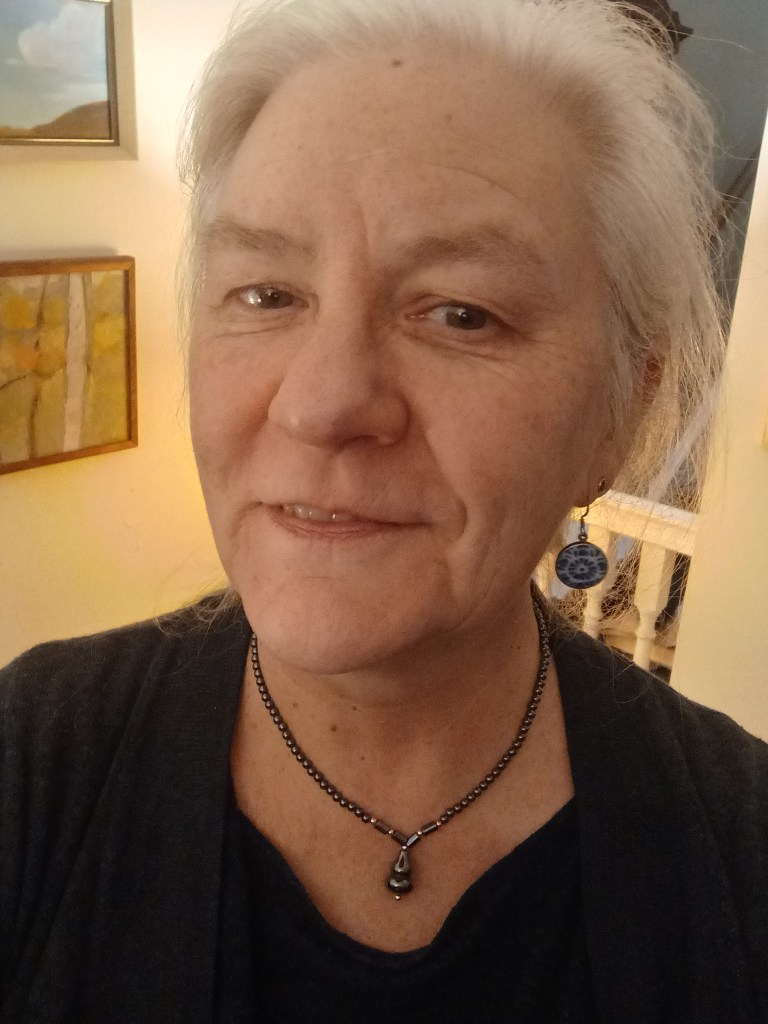
Interview with Jane Edna Mohler, Poetry Editor, Schuylkill Valley Journal, Vol. 59, Fall/Winter 2024
Reproduced with permission of the editors. Many thanks to Jane! Check out the gorgeous Schuylkill Valley Journal!
In your book Killing Summer, your poems span centuries and continents in a catalog of injustices. You write about the indigenous people of Massachusetts, prisoners in the US and Guantanamo, Iraq, Yemen, and more. I believe you wrote these poems living in Washington, D.C. And while there, you founded Split This Rock: Poetry of Provocation and Witness. Tell me about that organization. Did life in D.C. awaken your social concerns, or did it fan a flame you’ve had for a while? How and when did your conscience become so developed?
Thank you for this question and for the close reading of the book, Jane. I was fortunate to grow up in an activist family (hat tip to my 95-year-old dad) on the South Side of Chicago in the 1960s and 70s. Some of my earliest memories are of marching against the Vietnam War with my dad and of singing Freedom Songs at an interracial camp outside Chicago where my mother was a counselor. So I’ve always been an activist, and – I can’t help it – infused with the hopeful spirit of the Civil Rights Movement. I began writing poetry in earnest in my late 20s, during the early 1990s. “Establishment” poetry then was very stodgy and conservative. So many literary journals actually wrote, “No causes” in their guidelines in Poets’ Market, the pre-internet guide to getting our work out into the world.
It was bizarre! We were supposed to rope off one aspect of our lives – our engagement with the wider world – and not write about it? I tried, but you know what? We are indivisible. I am poet and activist, both. So, when I moved to Washington, DC, in 2002, I looked for and found a community of like-minded poets, all writing and organizing in the spirit of our predecessors in the Black Arts Movement, the LGBTQ liberation movement, the feminists.
We began organizing Split This Rock in 2006 as a home and a platform for this new generation of activist poets in DC and from around the country. We put on six national festivals, organized campaigns for racial and social justice, developed an extensive youth program, and published poets online in a database searchable by social issue, The Quarry. We helped shift the understanding of poetry in establishment circles and the broader culture, so that socially engaged work is now at the center of literary life, where it belongs. I stepped down in 2019, but Split This Rock is going strong!
Many women over fifty are pigeonholed with the stereotype that we just write about herons, our gardens, and family. Your poems express: powerful witnessing, enthusiastically rewarded lust, and huge empathy for those experiencing injustice. What do you think about the current status of over-fifty women-identifying poets?
Isn’t it funny that women over 50 are having our moment, thanks to Kamala Harris’s historic candidacy and the predictable panic of the conservative movement in response? Guess what, folks? Women over 50 can be creative, funny, energetic, sexual, pissed off, affectionate, profane, visionary, nurturing, grumpy – all at once. And our poetry can and does reflect this complexity.
The poetry community exists within the wider world, though, and so the world’s prejudices show up here as well: ageism, youth worship, misogyny, blanket assumptions. We all just have to keep writing our poems and sending them out. They will find their readers. And, I hope, challenge some of those absurdly narrow notions some people have of a wildly diverse group.
Your language is physical, writing about blood, lips, nipples, tears, etc. This physicality lends muscle to your plain-spoken poems. Have you always written about “the burning and splendor of this world?” I think your choice of the word burning is a great representation of your voice. Is this a deliberate choice or are you simply being Sarah? Tell me about the burning.
I was raised by English women – mother, grandmother, great aunt. To say that it was a repressed upbringing would be a vast understatement. But I often joke that I have a big, exuberant personality trapped in an Episcopalian body. I’ve spent decades trying to free myself – my body, my imagination, my contemplation of the possible – from the shackles of shame. Poetry has helped me on this journey, the way it challenges me to plumb my true self, not the self constructed from and within the strictures I grew up with. The burning is itself a source of shame. And yet, as you say, it is me. Celebrating the burning, the exuberance, the joy, the strong feeling and sending the shame off for its cup of tea – I still have to do this consciously every day. I still find myself frequently mired in shame, not recognizing its cripple for hours on end, as I worry and fret. Writing isn’t freeing, as such, but it is a road toward freedom.
Your currently unpublished manuscript Call Me Yes: A Memoir in Verse, seems like a new personal turn for you. I think many poets start personal and then become more political, or at least more outwardly focused. In reading the manuscript, I have the impression that you went through lots to come to your current place of joy in your life. Please talk about this transition between the two collections. How does it feel to write more personal poems?
I try to write whatever is pounding up inside me (or burning). My first two books contain numerous poems that would be considered personal, as well as the more explicitly political ones. But I think my work hangs out a lot at the intersection of these worlds. And you’re right, the new book journeys down the personal cross street at that intersection more directly and has the most thematic unity of my three collections. It follows the breakdown of my 27-year first marriage, through the absurdities of dating as an over-50-year-old woman, and into the tumble and embrace of new love. The body – my body, the bodies of women and girls – is always present, of course, and there are poems of lust and desire, sexual violation, physical change. A series of poems about my chronic pain, all titled “pain,” is a chorus throughout the collection.
Any public discussion of the female-identifying body is political, of course, and uniquely so when considering the over-50 body. Just suggesting we are sexual beings is political! So, I still think of it as a political book, just a slightly different one.
You write about all kinds of injustices, even those we can’t see. And you don’t hold yourself above the reader. One line that stands out to me is, “how white I am,” when you express the fears white folks were raised with in the twentieth century, such as crossing the street when a black man approaches. You don’t lecture us; you focus us. I think you pick up power that way. What do you say about that?
All white people in America are raised with racism in us. To claim otherwise is to suppress a stark reality. But the good news is we can recognize it and challenge it – within our psyches, in the ways we interact with others, in the policies and politicians we support. We can. I made a conscious decision to do so, once I was not so crippled by guilt. (I attended a training in the 90s led by the National Coalition Building Institute at which one of the leaders said, “Guilt is the glue that holds racism in place.” That is, it paralyzes white people and keeps us from examining ourselves and our circumstances and actions.) But we do have to recognize the racism and other kinds of bias and privilege within us first, to examine the ways that we are culpable. Likewise, even as well-intentioned citizens, all Americans are implicated in the child labor that builds our cell phones, the ravaging of the earth that warms our homes and fuels our cars. Finger pointing is not only alienating, it is dishonest. I strive for honesty in my writing. I don’t always achieve it but I try.
Something I admire about you, Sarah, is your literary citizenship. I see you involved in national teaching venues, supporting poets on social media, and you recently started a monthly reading series based in the Mt. Airy section of the city. Lots of poets are introverted; but you act as an ambassador in the field. Tell me about all of your involvement in the poetry world. Is this an extension of your activism?
Thank you for these kind words, Jane. I can’t really help myself. I am an extrovert: I thrive on interaction with others, as does my creative life. I cannot write in a vacuum. That does make me somewhat unusual among poets, but not unique; there are many great poet-organizers.
I am currently teaching online workshops through Writers in Progress, working one-on-one with poets and memoirists, and co-curating/co-hosting a new poetry series, Wild Indigo, with the great Raina León. The series takes place the third Sunday of the month, 5-7 pm, at Young American Cider on Germantown Avenue, on the border of Germantown and Mt. Airy in the northwestern part of the city. Raina and I both live in Northwest and we wanted to bring the brilliant poets we admire to our area. The series is also designed to build multiracial community and engage audiences with campaigns for social justice, as the progressive organization Reclaim Philadelphia is cosponsoring. I don’t think of these realms as distinct. Cultural organizing is a useful term.
Tell me about a few poets who influence you, and briefly, what is it you’ve learned from them?
I always and forever return to the work of Lucille Clifton. Her imagery is arresting, her concision brilliant, her honesty bracing. We lost her in 2010 – far too early. But we are lucky to still have her words to guide us. It’s impossible otherwise to choose so I’ll mention a few poets I’m reading now. Niki Herd’s newest, The Stuff of Hollywood, uses the stuff of America – movies, news reports – to indict our grotesque love affair with guns and violence and the distorting power of racism. Documentary poetics at its finest. Every poem by the Ukrainian-American poet Julia Kolchinsky Dasbach I’ve read has turned my head. The blind poet Kathi Wolfe died after a sudden and brief illness in June. I keep returning to her funny, sweet, self-deprecating poems. Kathi was a friend and I miss her.
Who are you besides a poet? What other parts of your life, past and present, inform your writing?
I’m the mom of a beautiful and brilliant 26-year-old man who lives in Brooklyn. I’ve been vague as a mom sometimes, but he knows I love him with everything I have. I’m also lucky in my new love, the painter and musician Michael Albrecht. And in my activist comrades and friends and siblings and step-daughter and nieces and nephews. I cherish these people I love and try to tell and show them frequently. But sometimes I get so caught up in my commitments and my internal swirlings, I have to remind myself: Community care is political work. Is personal work.
I’m an active member of the progressive organization Reclaim Philadelphia. I’m helping to organize a tribute to the amazing Larry Robin and Moonstone Arts Center, also in Philly. I’m still in love with and closely connected to my poetry community in DC. I love to cook, I love music and art and architecture, I’m interested in history and the many ways it informs our current moment, I walk in the Wissahickon. All these activities inform my writing.
Our featured poets always have a connection to the Philadelphia metro area. What brought you to Philly?
When I stepped down from Split This Rock, I decided to get an MFA, as a way to grow, of course, and to have structured time for my own writing. I’m a huge fan of Patrick Rosal, as a poet and teacher, and so decided on Rutgers University Camden, where Pat teaches. Happily they accepted me, as I didn’t apply anywhere else! I moved to Philly in the summer of 2019 and began the program that fall. Of course we went into lockdown in that spring semester, so the rest of my school time was on Zoom. Still so worth it!
What’s next? Is there a project you can’t wait to dig into?
I’ve been very slowly working on a hybrid poetry-prose project, part family history, part memoir, part racial justice manifesto. On my dad’s side I’m descended from Virginia enslavers, going many centuries back. Even while I was immersed in Black culture growing up in Chicago and even while my parents were strongly anti-racist, I still am all too familiar with Southern notions of our white exceptionalism, with the rotten nostalgia for a “genteel past.” I’m trying to explore this complicated dynamic, and especially the linguistic distortions that white people developed to mask – literally – the horrors of slavery, the crime against humanity they and their ancestors committed. It’s difficult. I don’t know if it will ever come to fruition. But I keep at it.
 Sarah Browning